Montessori education is an approach to learning developed by Dr Maria Montessori, an Italian physician and educator, in the early twentieth century. More than a hundred years later, her ideas continue to influence classrooms around the world. For parents and educators, understanding the principles behind Montessori education makes it easier to see why the approach appeals to so many families.
The core principles of Montessori education
Respect for the child
At the heart of the Montessori approach is respect for each child as a capable, curious individual. Children are seen as active participants in their own learning rather than passive recipients of information.
Learning through hands-on activity
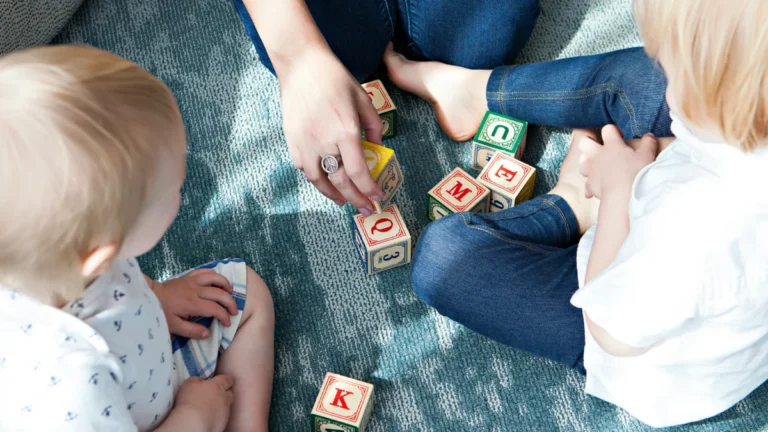
Montessori classrooms use specially designed materials that children handle and manipulate. Concepts such as quantity, shape, sound and order are explored through physical objects before they are represented in more abstract ways.
The prepared environment
Montessori classrooms are carefully organised. Materials are arranged on accessible shelves, the space is calm and orderly, and everything has a purpose. This “prepared environment” invites children to choose activities and work independently.
Freedom within limits
Children are given freedom to choose their work and move around the classroom, within clear boundaries. This balance helps them develop self-discipline and responsibility.
Mixed-age groups
Many Montessori classrooms bring together children of different ages. Younger children learn by observing older peers, while older children reinforce their understanding by helping others.
The role of the teacher
In Montessori settings, the teacher, often called a guide, observes each child closely, introduces materials at the right moment and supports rather than directs learning.
Potential benefits for children
Families and educators often value Montessori education for the qualities it aims to nurture.
- Independence. Children learn to make choices, care for their environment and complete tasks on their own.
- Concentration. Uninterrupted work periods help children develop focus.
- Love of learning. Following their interests can help children see learning as enjoyable.
- Practical life skills. Activities such as pouring, sorting and tidying build coordination and confidence.
- Social skills. Mixed-age classrooms encourage cooperation, patience and respect.
As with any educational approach, outcomes depend on how faithfully the method is applied, the training of the adults involved and the needs of each child.
Montessori and the early years
Montessori principles are especially closely associated with early childhood, a period when children are developing rapidly. Our article on early childhood education explores why these years are so important for lifelong learning.
Bringing Montessori ideas home
Parents do not need a full Montessori classroom to apply some of its ideas. Simple steps include:
- Arranging toys and books on low, open shelves so children can choose for themselves.
- Offering a few well-chosen activities rather than many at once.
- Involving children in everyday tasks such as setting the table or watering plants.
- Allowing time for children to finish an activity without interruption.
The importance of trained educators
Authentic Montessori education relies on teachers who understand its philosophy and materials. Training helps educators observe children effectively, present materials correctly and maintain a well-prepared environment.
A typical Montessori morning
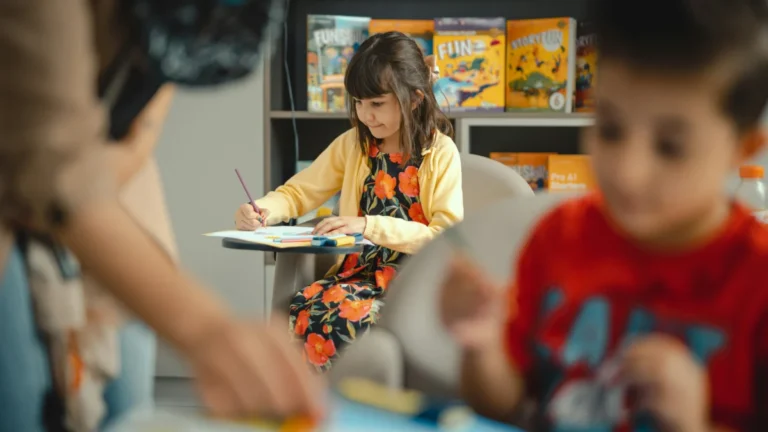
To picture the approach in practice, imagine a classroom for young children at the start of the day. Children arrive, hang up their bags and choose an activity from the open shelves. One child carefully pours water between small jugs, practising coordination and concentration. Another works with wooden beads to explore numbers, while two older children read together in a quiet corner. The guide moves calmly around the room, observing, offering a new material to a child who is ready and stepping back when a child is absorbed in their work.
There is little whole-class instruction during this period. Instead, the environment and materials do much of the teaching, with the adult supporting each child’s next step.
Conclusion
Montessori education places the child at the centre of learning, combining hands-on materials, thoughtfully prepared environments and skilled guidance. For many families, it offers a meaningful way to nurture independence, concentration and a lasting love of learning.
The Chelis Montessori Center promotes authentic Montessori education through materials, resources and teacher education, and Neo-Montessori Life shares Montessori ideas with parents and educators. To learn more, get in touch with our team.